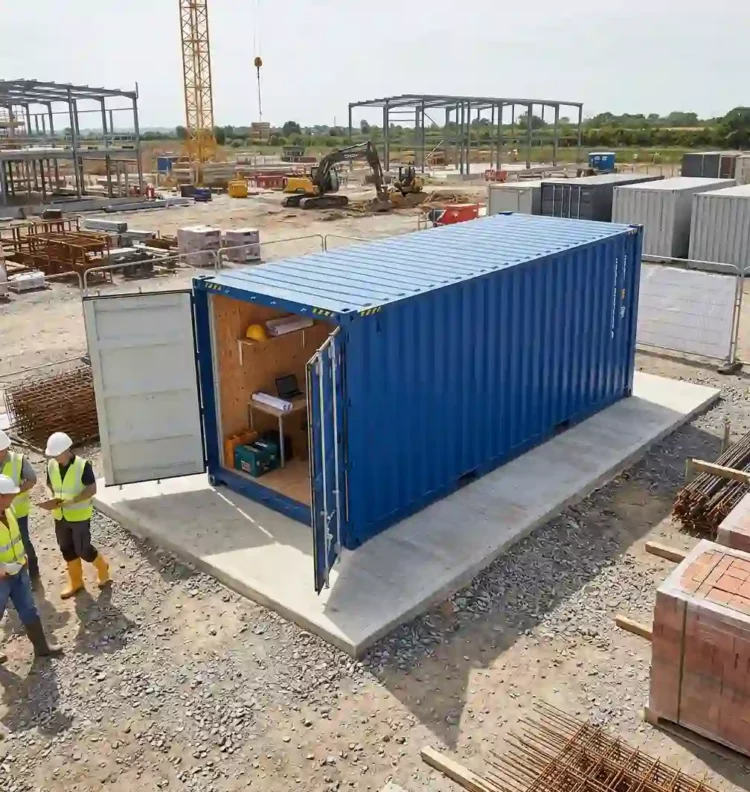


National Dispatching operates on a single principle: one request from a contractor
should be sufficient to initiate the entire procurement and dispatching function.
What happens between that first contact and the confirmed delivery involves nine
defined stages, each with a specific purpose, a documented output, and a clear
gate before the next stage begins. Understanding those stages matters because it
shows exactly where value is created, where informal procurement typically fails,
and what accountability at every step actually looks like in practice.
Why Construction Procurement Needs a Defined Process
The absence of a defined procurement process is not neutral. When a project manager
sources equipment through a sequence of informal phone calls, familiar vendors, and
verbal agreements, every step in that sequence becomes a potential gap. The vendor
might confirm availability that does not hold. The delivery window might shift without
notification. The invoice might not match what was agreed verbally. None of these
failures are inevitable, but without a structured process, none of them are prevented
either.
National Dispatching’s nine-stage lifecycle exists to close those gaps at each step.
The process is not a formality. It is the mechanism through which procurement becomes
accountable, traceable, and repeatable across every order type, every geography, and
every contractor relationship in the National Dispatching network.
The lifecycle applies to all six service categories that National Dispatching manages:
Rental Equipment, Ready-Mix Concrete, Aggregates, Portable Sanitation, Trucking, and
Subcontractor services. Most categories follow the full nine stages. Rental orders have
additional management requirements between delivery and invoice. The structure scales
to every order size, from a single truck dispatch to a 26-month portable sanitation
arrangement on a major infrastructure site.
The National Dispatching procurement lifecycle is a nine-stage process running from contractor Intake through vendor sourcing, confirmed Dispatch, on-site management (Rental track), and final Invoice and Close. Every stage has a defined gate that must be cleared before the next stage begins. No informal steps. No verbal authorisations that are not subsequently documented.
Stage 01 and 02: Intake and Quote
The lifecycle begins at Intake. When a contractor contacts National Dispatching with
a requirement, the Intake stage establishes the full scope of what is needed before
any sourcing begins. This includes the product or service type, quantity, required
delivery date and time, site address, on-site contact details, purchase order or
project reference, and urgency level. The gate to advance from Intake is confirmation
that the scope, site, and need-by date are fully defined and the order has been opened
in the system.
Intake is followed immediately by the Quote stage. At this point, National Dispatching
builds a formal quote covering the customer rate for the required product or service,
delivery and pickup fees where applicable, applicable taxes by jurisdiction, and any
REP (Replacement Equipment Protection) options relevant to the order type. The contractor
reviews the quote and either accepts it or authorises the order to proceed. That
acceptance or authorisation is the gate to Stage 03.
The Quote stage is where the contractor’s financial exposure is documented before
any purchase commitment is made. This is a protection that informal procurement
arrangements rarely provide at this early point in the process.
Stage 03 and 04: Source and Secure
Once the quote is accepted, Stage 03 begins: Sourcing. National Dispatching searches
the pre-qualified vendor network for suppliers near the job site that have confirmed
availability for the required product or service. The sourcing process produces a
side-by-side comparison of available vendors, including vendor pricing, delivery or
pickup charges, distance to the site, and lead time to delivery. Vendors who are
evaluated but not selected are logged in the system. The gate to advance from Sourcing
is that a vendor has been selected from the comparison and passed to the next stage.
Stage 04 is Secure. The selected vendor’s pricing is confirmed through negotiation
where applicable, a formal purchase order is issued to the vendor, and all delivery
and pickup charges are agreed and documented. This is the stage where the financial
commitment to the vendor is formalised, replacing any verbal understanding with a
documented PO that both parties acknowledge. The Secure stage gate is vendor
acceptance of the issued purchase order.
The separation of Sourcing and Securing into two distinct stages is deliberate. Sourcing establishes which vendor is selected. Securing establishes the formal contractual commitment to that vendor. Keeping these as separate gates prevents informal verbal selections from being treated as binding orders before documentation is in place.
Stage 05 and 06: Confirm and Dispatch
Stage 05 is Confirmation. The vendor provides a formal confirmation of the order
including the delivery window and, for Rental orders, a signed rental agreement.
REP coverage and Certificate of Insurance documentation are collected at this stage
for applicable order types. The contractor receives confirmation of the order along
with the logistics details for delivery. The gate at Confirmation is that the order
is verified, scheduled, and all required documentation is on file.
Stage 06 is Dispatch and Delivery. Dispatch instructions are issued, the delivery
date and time are confirmed, the driver contact is logged, and the proof of delivery
is collected when the equipment or material arrives on site. The gate at Stage 06 is
confirmation that the order has been delivered to the site and is active. For
Non-Rental orders, ready-mix concrete, aggregates, trucking, consumables, and most
subcontractor services, Stage 06 is followed directly by Stage 09, Invoice and Close.
For Rental orders, the lifecycle continues through two additional stages.
Stages 07 and 08: On-Site Management and Call-Off
Rental orders have requirements that Non-Rental categories do not. Equipment placed
on a construction site on a rental basis remains there for a defined period, generating
billable days, requiring service coordination if something fails in the field, and
eventually requiring a formal call-off when the contractor no longer needs it.
Stage 07 is Manage on Site. During this stage, the on-rent clock runs and billable
days are tracked. Extensions are coordinated where the rental period needs to extend
beyond the original agreement. Service calls and equipment swaps are managed through
this stage when equipment failure or specification issues arise on site. The gate to
advance from Stage 07 is the contractor’s initiation of a call-off request.
Stage 08 is Call-Off and Return. The call-off request is processed, pickup is
coordinated with the vendor, and the confirmed return date is established. The gate
at Stage 08 is confirmation that the equipment has been off-rented and physically
picked up from the site. The Rental track then advances to Stage 09.
Non-Rental track orders bypass Stages 07 and 08 entirely. Once the material or
service has been delivered at Stage 06, the order moves directly to Invoice and Close.
- On-rent activation date and confirmed delivery
- Billable day count through the rental period
- Extension requests and revised return dates
- Service call log and swap records
- Call-off request with confirmed pickup window
- Equipment return confirmation from vendor
Stage 09: Invoice and Close
Stage 09 applies to every order type. It is the final stage of the lifecycle,
covering the preparation of the final invoice to the contractor, vendor payable
reconciliation, applicable tax calculation, and the completion of the vendor
scorecard for the order.
The vendor scorecard is a performance evaluation completed at the close of every
order, covering delivery reliability, equipment or material condition, communication
quality, and adherence to the agreed pricing and schedule. Scorecard data is retained
in the vendor record and used in future Sourcing comparisons for subsequent orders.
The gate at Stage 09 is that the invoice has been issued to the contractor and
reconciled against the vendor payable. All order data is retained in the system for
the contractor’s record and for National Dispatching’s ongoing vendor performance
management.
The Two Order Tracks in Practice
Understanding the distinction between the Rental and Non-Rental tracks clarifies
why National Dispatching’s process is built the way it is.
Rental orders involve equipment that stays on site over a period of days, weeks, or
months. The asset generates a daily cost that must be tracked, and the contractor
must formally call off the rental before the equipment is retrieved. Heavy machinery
such as excavators, cranes, and forklifts follow this track. So does portable
sanitation, which requires recurring service over the rental period. The Rental track
runs through all nine stages because the period between delivery and return requires
active management.
Non-Rental orders involve materials or services that are consumed or completed at
the point of delivery. Ready-mix concrete is poured and done. Aggregates are
delivered and incorporated into the project. A trucking order delivers its load
and the engagement closes. These orders follow Stages 01 through 06 and then advance
directly to Stage 09, because there is no asset to manage, no billable day to track,
and no call-off to coordinate.
Both tracks follow the same core discipline: formal intake, documented quote, structured
sourcing, secured vendor commitment, confirmed delivery, and invoiced close. The
difference is in what happens between delivery and invoice for orders where an asset
remains on site.
Key Takeaways
- National Dispatching’s nine-stage procurement lifecycle creates a defined gate at
every step from contractor Intake through vendor sourcing, delivery, and final Invoice
and Close, replacing informal arrangements with a documented, accountable process. - The Intake and Quote stages establish the full scope and financial agreement before
any vendor search begins, protecting contractors from cost surprises that informal
sourcing typically defers until delivery or invoicing. - The separation of Source and Secure into two stages ensures vendor selection is based on a structured comparison before any formal purchase order commitment is made.
- Rental track orders include two additional management stages covering on-rent asset
tracking, extension coordination, and formal call-off before the order closes,
reflecting the ongoing nature of equipment that stays on site over time. - Non-Rental orders bypass Stages 07 and 08, advancing from confirmed delivery directly to Invoice and Close, which applies to ready-mix concrete, aggregates, trucking, consumables, and most subcontractor services.
- The vendor scorecard completed at Stage 09 feeds directly into future sourcing
comparisons, ensuring that every completed order contributes to the quality of the
pre-qualified vendor network over time.